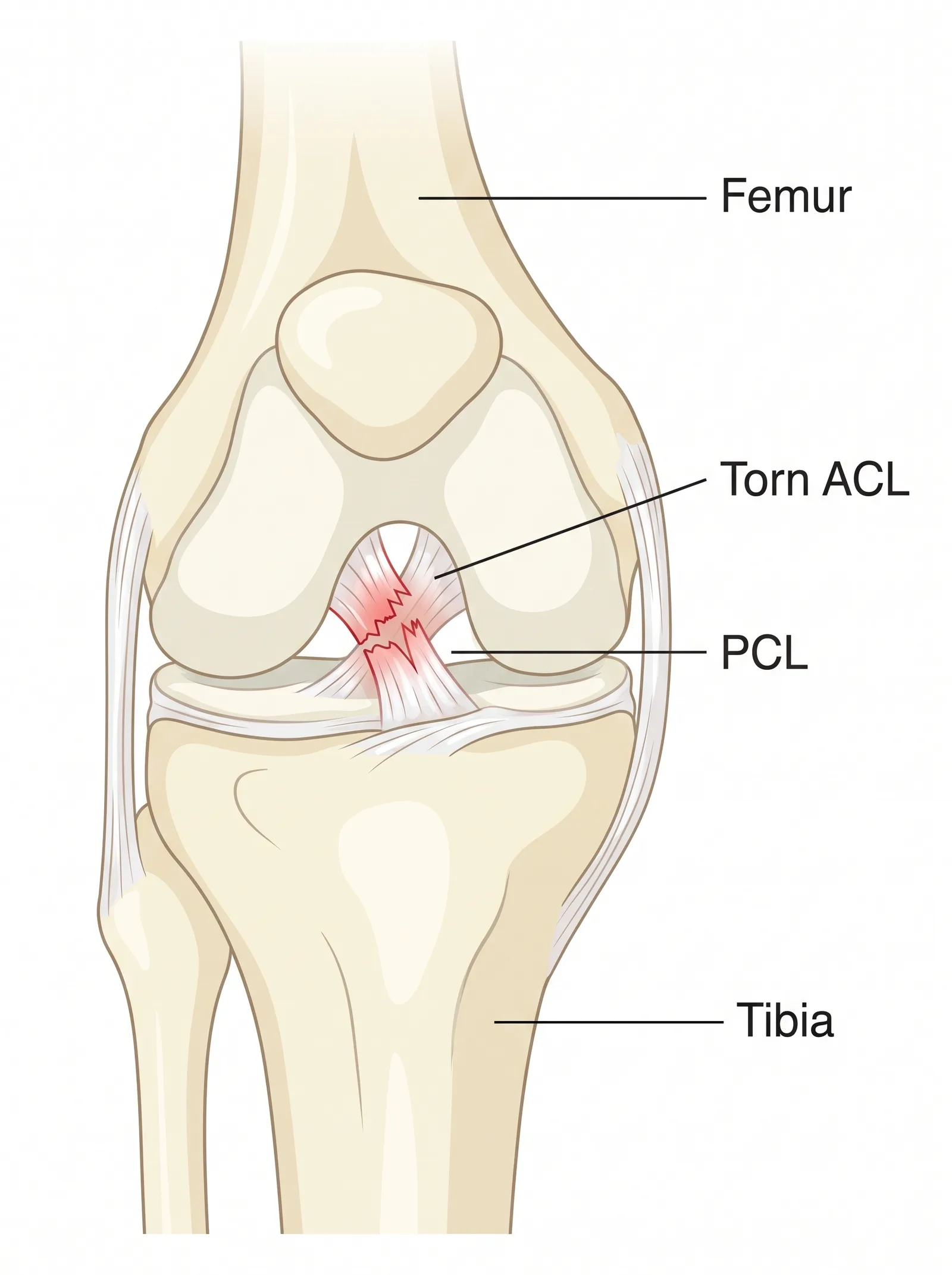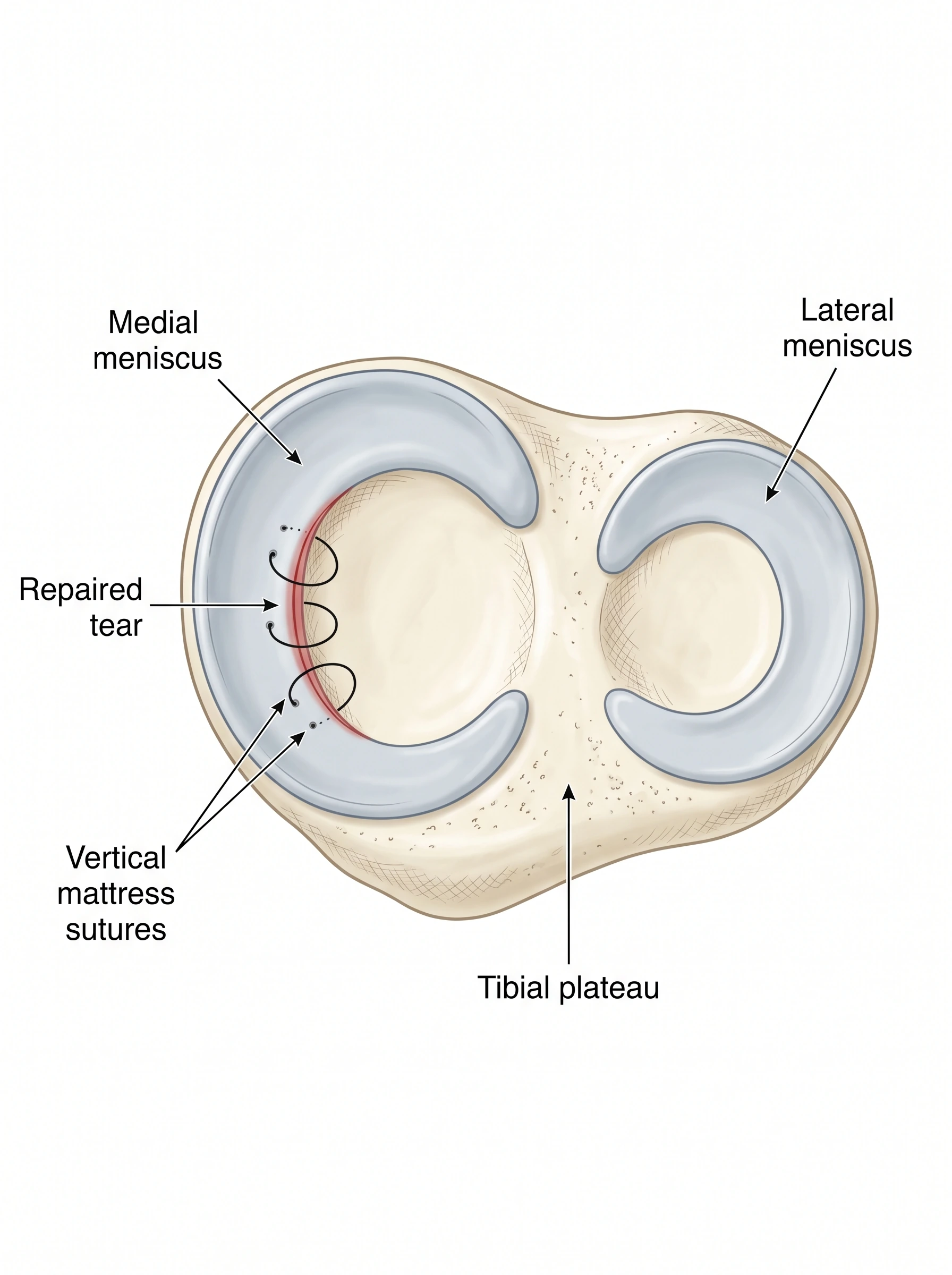
Meniscus repair stitches a torn knee cushion back together so it can heal, rather than removing the torn part. It is chosen for certain tears in areas with blood supply. Recovery protects the repair early and rebuilds strength over several months.
Ryan Simovitch performs meniscus repair in West Palm Beach when it is the right step, and reviews every alternative with you first.
What is Meniscus Repair?
Meniscus repair is surgery to stitch a torn meniscus back together.
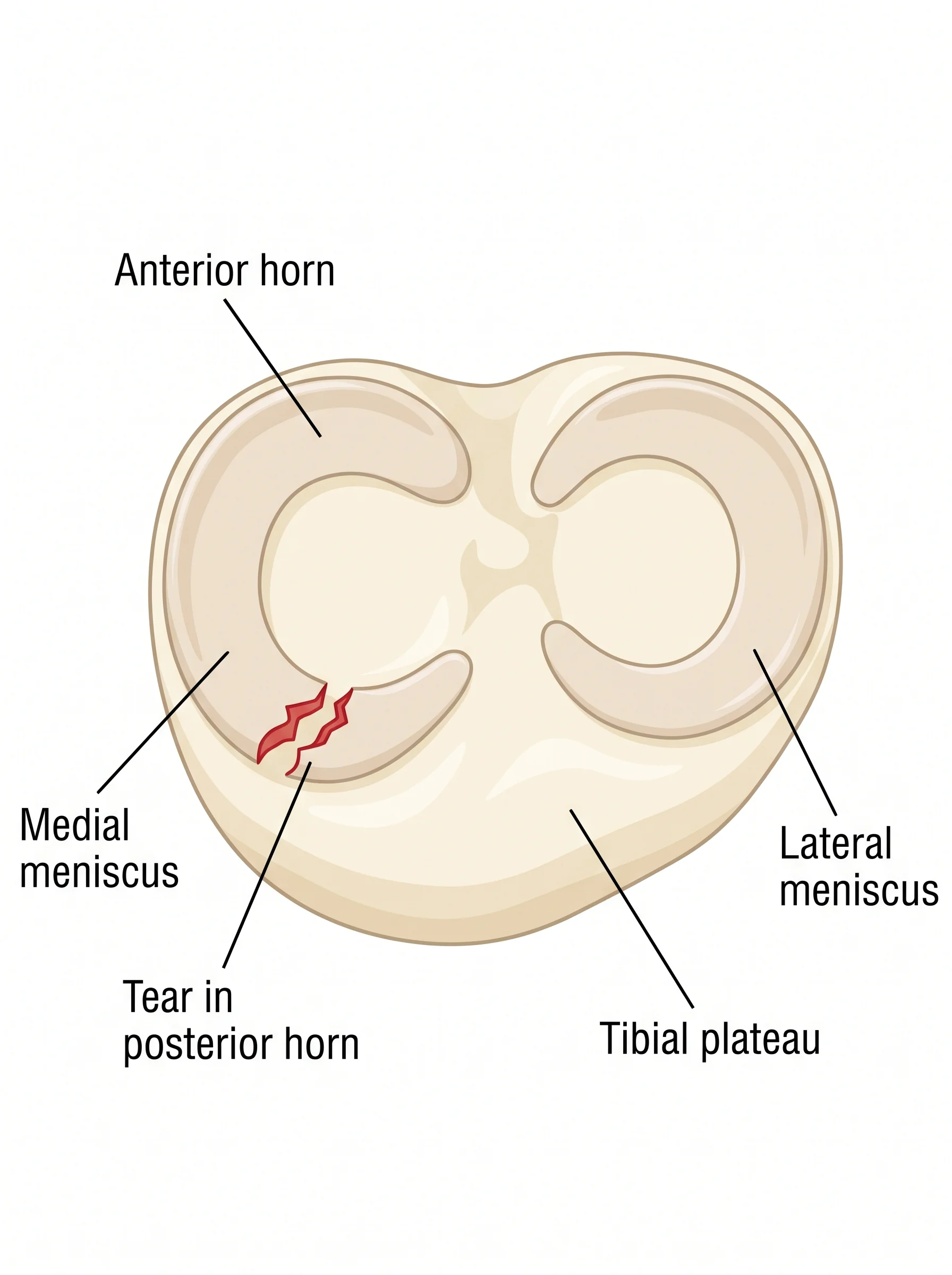
The meniscus is a C-shaped pad of cartilage that sits between the thighbone and shinbone and acts as a cushion and shock absorber. Each knee has two, one on the inner side and one on the outer side. A tear can happen from a twist during sport or, in older knees, from everyday wear.
There are two main surgical approaches to a meniscus tear. In a repair, the surgeon sews the torn edges together so they can heal, which preserves the cushion. In a trimming, called a meniscectomy, the torn piece is removed instead. Repair is preferred when the tear is in a spot with enough blood supply to heal, because keeping the meniscus helps protect the joint over the long term. Not every tear can be repaired, and the surgeon decides based on the tear's location and pattern.
This is a deep-education page. For a shorter overview, see our Meniscus Repair service page, which links back here.
What are the symptoms of Meniscus Repair, and when should you see a specialist?
A meniscus tear often causes symptoms along the joint line, the seam where the bones meet.
Common signs include the following.
- Pain on the inner or outer side of the knee, especially with twisting or squatting. - Swelling that develops over a day or two. - Catching or locking, where the knee sticks. - A feeling that the knee gives way. - Trouble fully straightening the knee.
See a specialist when the knee locks, catches, or stays swollen, or when pain limits what you do. An orthopedic surgeon can tell whether the tear is a type that might be repaired, trimmed, or managed without surgery. The sooner certain repairable tears are evaluated, the more options may be available.
How is Meniscus Repair diagnosed, and what does the visit involve?
The surgeon asks how the injury happened and where it hurts.
The exam includes gentle twisting tests that stress the meniscus and checks for tenderness along the joint line and for locking.
X-rays check the bones and joint space. An MRI (a soft-tissue scan) is usually ordered because it shows the meniscus and reveals the tear's size, location, and pattern, which decide whether repair is possible. The surgeon combines the exam and imaging to plan, though the final decision between repair and trimming is sometimes confirmed during surgery when the tear is seen directly.
What happens during Meniscus Repair, step by step?
Meniscus repair is done arthroscopically, through small openings with a camera.
The usual sequence is the following.
- Anesthesia. An anesthesiologist gives you medicine so you feel nothing, general anesthesia or a regional block. - Camera and inspection. The arthroscope goes in through small cuts so the surgeon can see the tear and judge whether it can be repaired. - Preparing the tear. The surgeon freshens the torn edges to encourage healing. - Placing sutures. Small stitches, sometimes with tiny anchors, are used to bring the torn edges together and hold them. - Checking the repair. The surgeon confirms the meniscus is secure and the knee moves well. - Closing. The small cuts are closed and a dressing, and often a brace, is applied.
If the tear turns out not to be repairable, the surgeon may trim it instead, based on the plan you discussed beforehand. The surgery commonly takes about an hour, though your time may differ.
What is the recovery timeline for Meniscus Repair?
Recovery after a repair is more protective than after a trimming, because the stitched tissue needs time to heal before it is stressed.
Milestones matter more than dates. The ranges below reflect general AAOS guidance, 2023. These are ranges, not promises.
First weeks. The milestone is protecting the repair. You may use a brace and limit how much weight you put on the knee and how far you bend it, following your surgeon's instructions. Swelling is managed with rest and ice.
Around six weeks. The milestone is walking without the brace, regaining fuller motion, and building strength as the repair heals.
Three months. The milestone is normal daily activity and steady strengthening. Low-impact exercise often returns during this stretch.
Four to six months. The milestone is returning to sport or heavier activity, cleared by strength and stability, not the calendar alone. General AAOS guidance, 2023, notes that healing after a repair commonly takes several months, but this is a range, not a promise.
By comparison, recovery after a simple trimming is usually faster, since there is no stitched tissue to protect. Physical therapy guides each stage.
Read the full guide to preparing for surgery →
Your own recovery instructions come from the office and are specific to you. This page describes the general course, not a plan to follow.
How should you prepare for Meniscus Repair?
A little preparation makes the visit more useful.
- Home setup. Prepare a rest area with leg elevation and ice, and clear walking paths for crutches. - Transportation. Arrange rides, since you cannot drive after surgery for a time. - Time off. Plan time away from work based on your job and whether a brace limits you. - Who to have available. Have someone with you the first days. - Pre-surgery health. Share your medicine list and follow any pausing instructions.
Which warning signs should you call about?
Call the office if you notice the following.
- Fever, or redness, warmth, or drainage at an incision, which can signal infection. - Calf pain or new leg swelling, which can signal a blood clot. - Sudden chest pain or trouble breathing. Call 911. - Swelling or pain that keeps worsening. - A new locking of the knee or a sudden loss of motion.
When unsure, call the office. For emergencies, call 911.
What results can you expect from Meniscus Repair?
According to general AAOS guidance, 2023, many meniscus repairs heal successfully, especially tears in the outer part of the meniscus where blood supply is better.
The same guidance, AAOS, 2023, notes that a portion of repairs do not fully heal and may need further treatment, and that keeping the meniscus, when possible, helps protect the joint over the long term. These are group findings, not promises about any one person.
The office can explain what results are reasonable for your specific tear.
What do patients ask most?
What is the difference between repair and trimming?+
Why keep the meniscus if trimming is faster?+
Why is recovery longer after a repair?+
How do I handle insurance and cost questions?+
Will I need a brace?+
What are the treatment options?
- 01Rest, ice, and activity changesto calm swelling and pain.
- 02Physical therapyto strengthen the muscles that support the knee.
- 03Medicine, such as anti-inflammatory drugs (medicines that reduce swelling), used as directed.
- 04Injectionsin some cases to quiet inflammation.
Fellowship trained at Massachusetts General Hospital (Harvard Shoulder Service); Uniklinik Balgrist, Zurich, Switzerland (The Harvard Intercontinental Shoulder Fellowship). Sees patients in West Palm Beach.
About Dr. Simovitch →