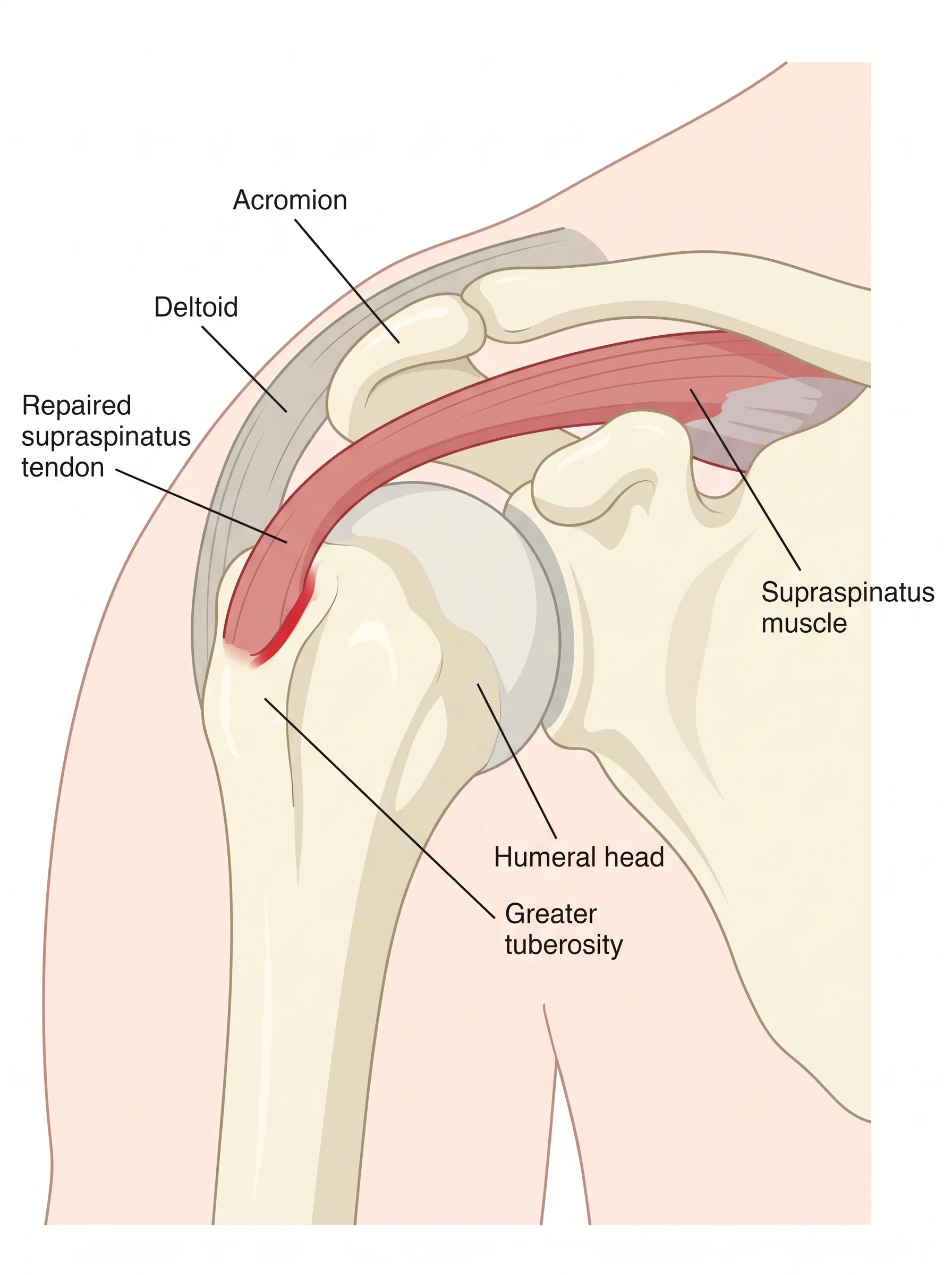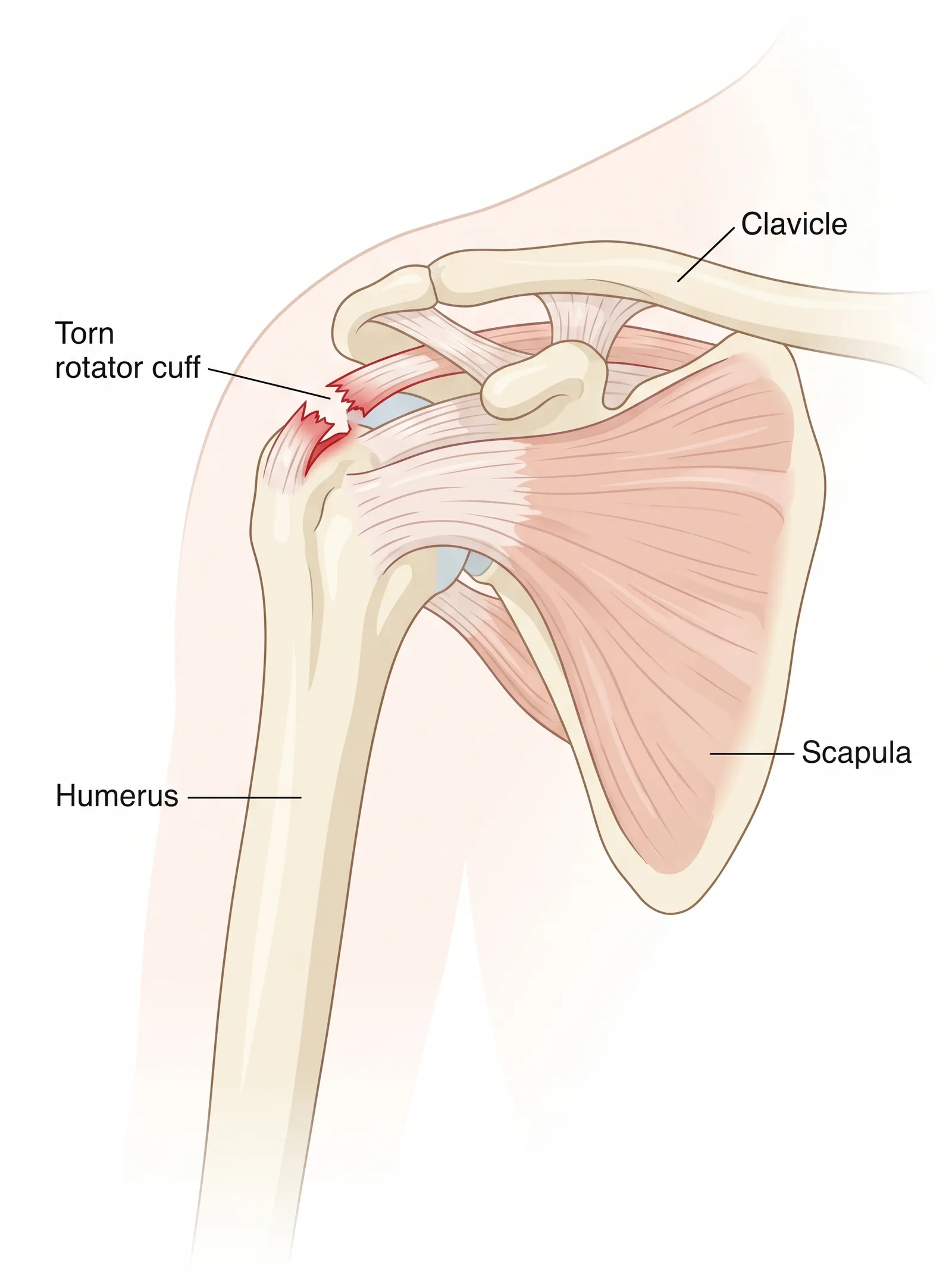
A rotator cuff tear is a partial or full tear in one of the four muscles and tendons that hold the shoulder in place and lift the arm. It can come on slowly with age or suddenly from an injury. Care starts with rest, therapy, and other non-surgical steps. Surgery is one option when those do not help.
Ryan Simovitch diagnoses and treats rotator cuff tear in West Palm Beach, from the first visit through recovery.
What is a rotator cuff tear?
The rotator cuff is a group of four muscles and their tendons (the strong cords that connect muscle to bone) that surround the top of the arm bone.
Together they hold the ball of the shoulder in its socket and let you raise and rotate your arm. A rotator cuff tear is a split in one of these tendons, usually the tendon called the supraspinatus at the top of the shoulder.
Tears fall into two broad groups. A partial tear damages part of the tendon but does not go all the way through. A full tear, also called a full-thickness tear, goes all the way through, so the tendon is no longer fully attached to the bone. Tears also differ by cause. A degenerative tear develops slowly as tendon tissue wears with age and use. An acute tear happens in a single moment, often from a fall onto an outstretched arm or from lifting something heavy the wrong way.
Rotator cuff tears are common, and many are found by chance in people who have no pain at all. That is why a tear on an imaging scan is only part of the picture. What matters is how your shoulder feels and works, and that is the conversation to have with a shoulder specialist.
What are the symptoms of Rotator Cuff Tear, and when should you see a specialist?
Most people notice a rotator cuff tear as pain on the outside or front of the shoulder.
In patient words, the common signs are the following.
- Pain when you lift your arm overhead, reach behind your back, or put on a coat. - A deep ache that makes it hard to sleep, often worse when lying on the affected side. - Weakness when lifting or when holding your arm out to the side. - A catching or crackling feeling when you move the shoulder. - With a sudden injury, a sharp pain at the moment it happened, then weakness after.
A tear does not always hurt a lot. Some people feel more weakness than pain, especially with slow, age-related tears.
It is reasonable to see a shoulder specialist if shoulder pain or weakness lasts more than a few weeks, keeps waking you at night, or limits work or daily tasks. See a specialist sooner if you cannot lift your arm at all after an injury, or if the arm feels suddenly weak after a fall. Sudden, complete weakness after trauma can point to a large tear that does better with earlier care. This section explains the condition; it does not tell you which one you have. A specialist visit is how that gets sorted out.
How is a rotator cuff tear diagnosed?
A diagnosis starts with your story and a physical exam, not with a scan.
Your specialist will ask when the pain began, what makes it better or worse, and how it affects sleep and daily tasks. During the exam, the specialist moves your arm through different positions and asks you to push or lift against gentle resistance. These movements test each part of the rotator cuff and show where the weakness is.
Imaging fills in the detail. An X-ray does not show the tendon itself, but it shows the bones and can reveal changes that go along with cuff problems, such as bone spurs or shifting of the joint. To see the tendon, specialists most often use ultrasound or MRI (magnetic resonance imaging, a scan that shows soft tissue in detail). Both can show whether a tear is partial or full and how large it is. Your specialist uses the exam and the images together. A scan alone does not decide treatment.
What happens during rotator cuff repair?
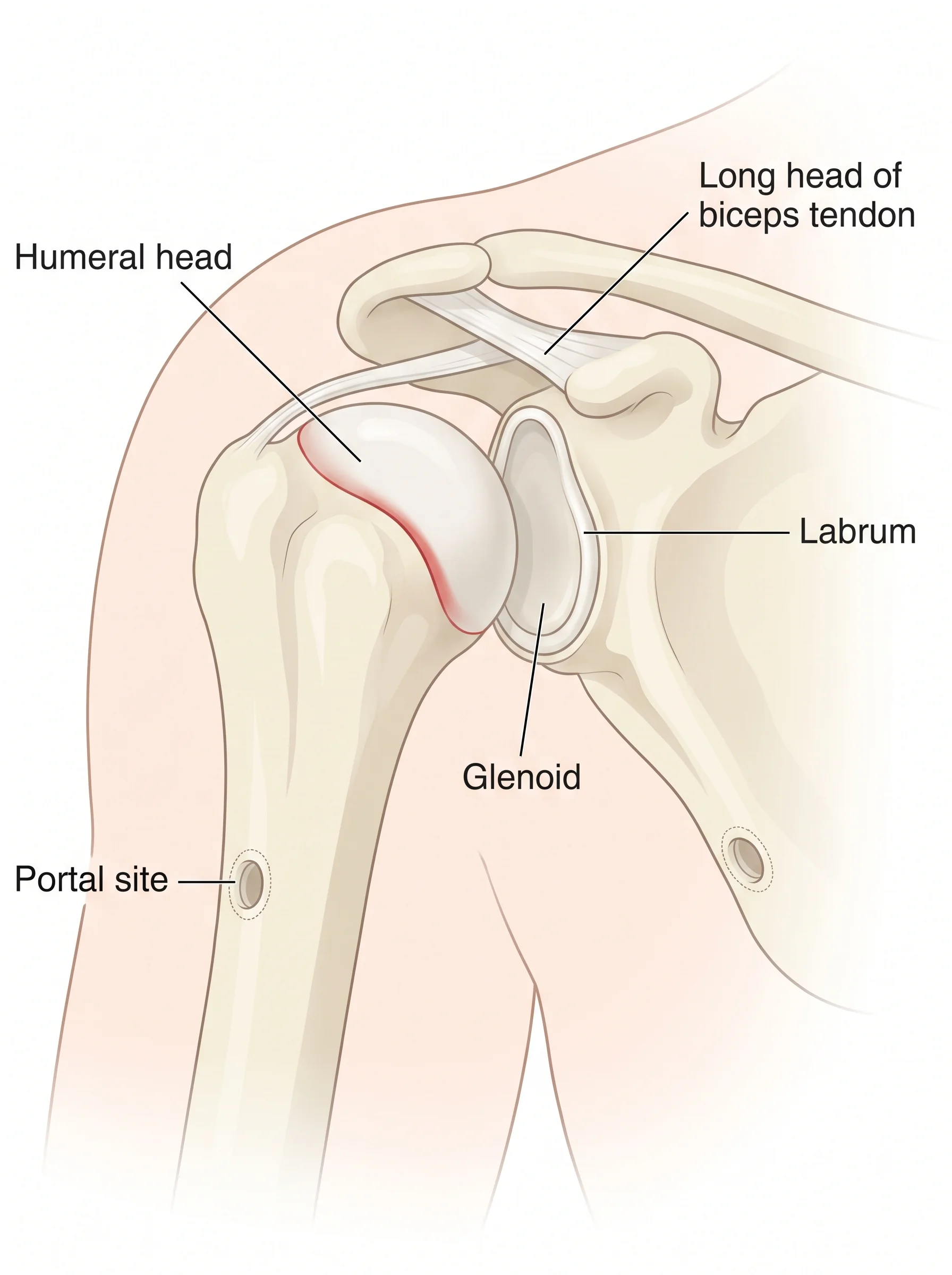
When surgery is chosen, most rotator cuff repairs are done with arthroscopy (a technique that uses a small camera and thin instruments through small cuts rather than one large opening).
The general sequence is as follows.
- You receive anesthesia so you feel no pain during the procedure. Your team reviews the plan with you first. - The surgeon makes a few small cuts around the shoulder and inserts the camera and instruments. - The joint is inspected. The surgeon confirms the tear and checks for other issues, such as a bone spur or a biceps tendon problem, that may need attention at the same time. - The torn tendon is cleaned and brought back to its natural spot on the bone. - Small anchors are placed in the bone, and stitches from the anchors hold the tendon in place while it heals. - The small cuts are closed, and your arm is placed in a sling.
Most rotator cuff repairs are done as outpatient surgery, meaning you go home the same day. The exact steps depend on the size and shape of the tear, which is why the plan is set with your surgeon.
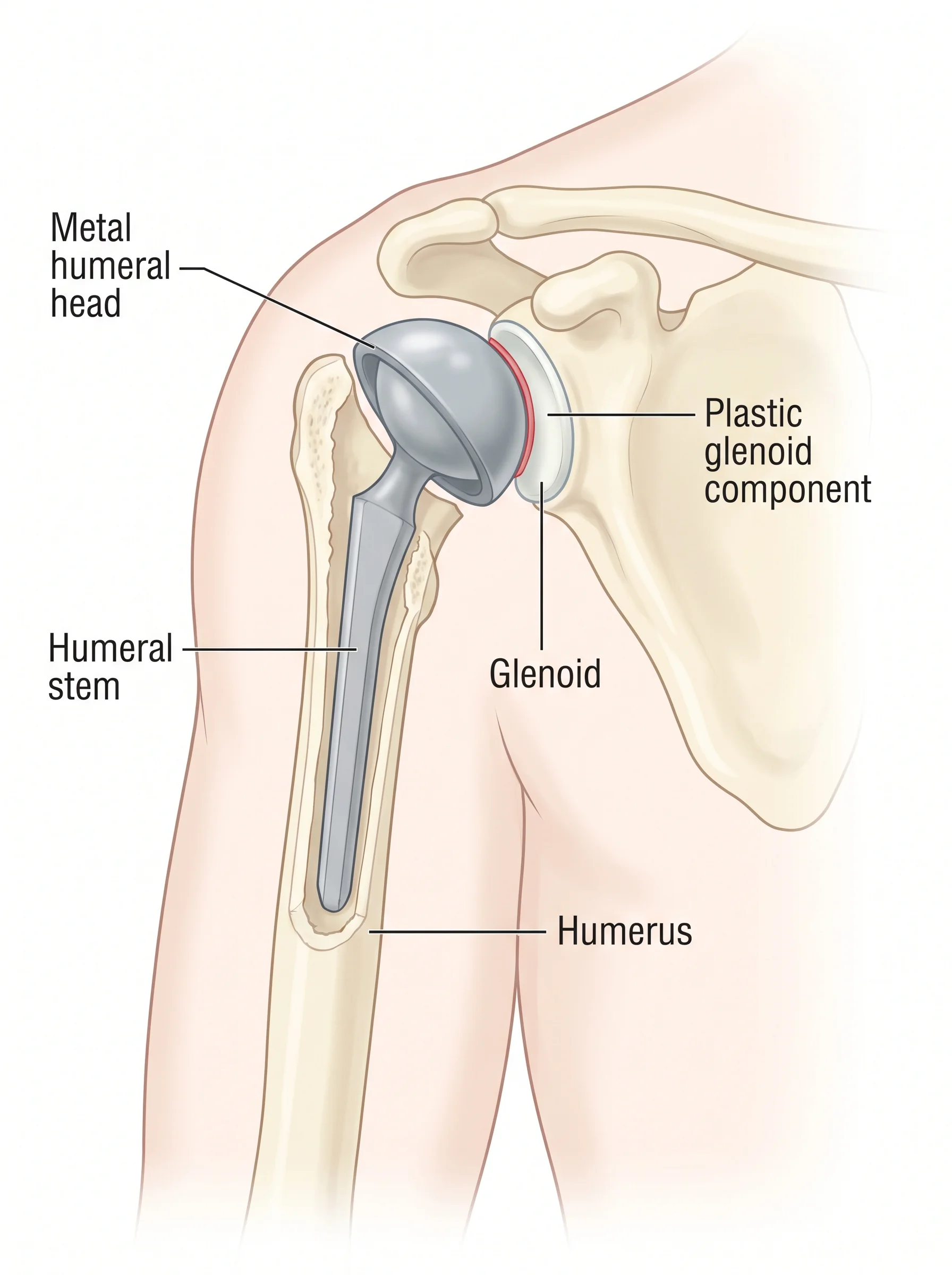
What is the recovery timeline for Rotator Cuff Tear?
Recovery from a rotator cuff repair is measured by what your shoulder can do, not only by the calendar.
The tendon needs time to heal to the bone before it is loaded, so progress is steady and staged. Milestones by ability usually follow this order.
- Protect (early weeks). The arm stays in a sling to protect the repair. A therapist may move your arm for you so the joint does not get stiff, while your own muscles rest. - Regain motion. Once the repair is protected enough, you begin moving the shoulder yourself, first with help and then on your own. The goal of this stage is comfortable, near-full motion. - Rebuild strength. After motion returns, strengthening begins. This is gradual, because the tendon is still maturing. - Return to activity. You return to fuller activity when strength and control meet your daily and work demands, judged with your therapist and surgeon.
For a sense of typical length, many people wear a sling for the first several weeks, and full recovery of strength commonly takes several months to about a year after a rotator cuff repair, according to general guidance from the American Academy of Orthopaedic Surgeons (AAOS). These are ranges, not promises. Your timeline depends on the size of the tear, your health, and how rehabilitation goes. Your surgical team will map it with you.
How should you prepare for surgery?
A little planning before the day of surgery makes the first weeks easier.
Because one arm will be in a sling, set up so you can manage with the other hand.
- Home setup. Put everyday items within easy reach at waist height. Loose, front-opening shirts are easier than pullovers. A recliner or a wedge pillow can help you rest more comfortably than lying flat. - Transportation. Arrange a ride home, since you cannot drive after anesthesia. Plan for someone to drive you for as long as you are in the sling and using pain medicine. - Time off. Ask your surgeon what to expect for your job. Desk work and heavy labor come back on very different schedules. - Help on hand. Have someone available for the first few days for meals, dressing, and errands. - Prehab. If your surgeon recommends therapy before surgery, it can make recovery smoother.
Which warning signs should you call about?
After an injury or after surgery, most shoulder recovery is uneventful.
Still, some signs need a call. Contact your specialist's office or your surgical team if you notice the following.
- Fever, spreading redness, or fluid draining from an incision. - Pain that is getting worse instead of better, or is not controlled by your prescribed plan. - New numbness, tingling, or a hand that looks pale or feels cold. - Calf pain or swelling, chest pain, or shortness of breath. These need urgent attention and may mean calling emergency services rather than the office.
When in doubt, call the office. It is always reasonable to ask.
What results can you expect from Rotator Cuff Tear?
Most people who have a rotator cuff repair get good relief of pain and improved use of the arm over time.
Larger tears and poorer tendon quality can make full healing less certain, which is why your specialist sets expectations based on your specific tear. According to general guidance from the American Academy of Orthopaedic Surgeons (AAOS), outcomes are generally favorable for pain relief, and recovery of strength continues for months after surgery. These are ranges and general findings, not promises for any one person. The clearest way to understand your likely result is a conversation with your surgeon about your tear.
What do patients ask most?
Can a rotator cuff tear heal on its own?+
Do I need surgery for a rotator cuff tear?+
How long will my arm be in a sling?+
Will the pain wake me up at night for long?+
What are the treatment options?
- 01Activity changesAvoiding the motions that trigger pain, especially repeated overhead reaching, gives the tendon a chance to calm down.
- 02Physical therapyA guided program strengthens the muscles around the shoulder and the shoulder blade so they take some load off the injured tendon. Therapy also restores motion. This is the core of non-surgical care.
- 03Anti-inflammatory medicineOver-the-counter medicines that reduce pain and swelling can help during flare-ups. Use them as directed and ask your specialist if you have other health conditions.
- 04Cortisone injectionA shot of anti-inflammatory medicine into the shoulder can lower pain enough to let therapy move forward. It is a tool to support rehabilitation, not a cure for the tear.
Fellowship trained at Massachusetts General Hospital (Harvard Shoulder Service); Uniklinik Balgrist, Zurich, Switzerland (The Harvard Intercontinental Shoulder Fellowship). Sees patients in West Palm Beach.
About Dr. Simovitch →