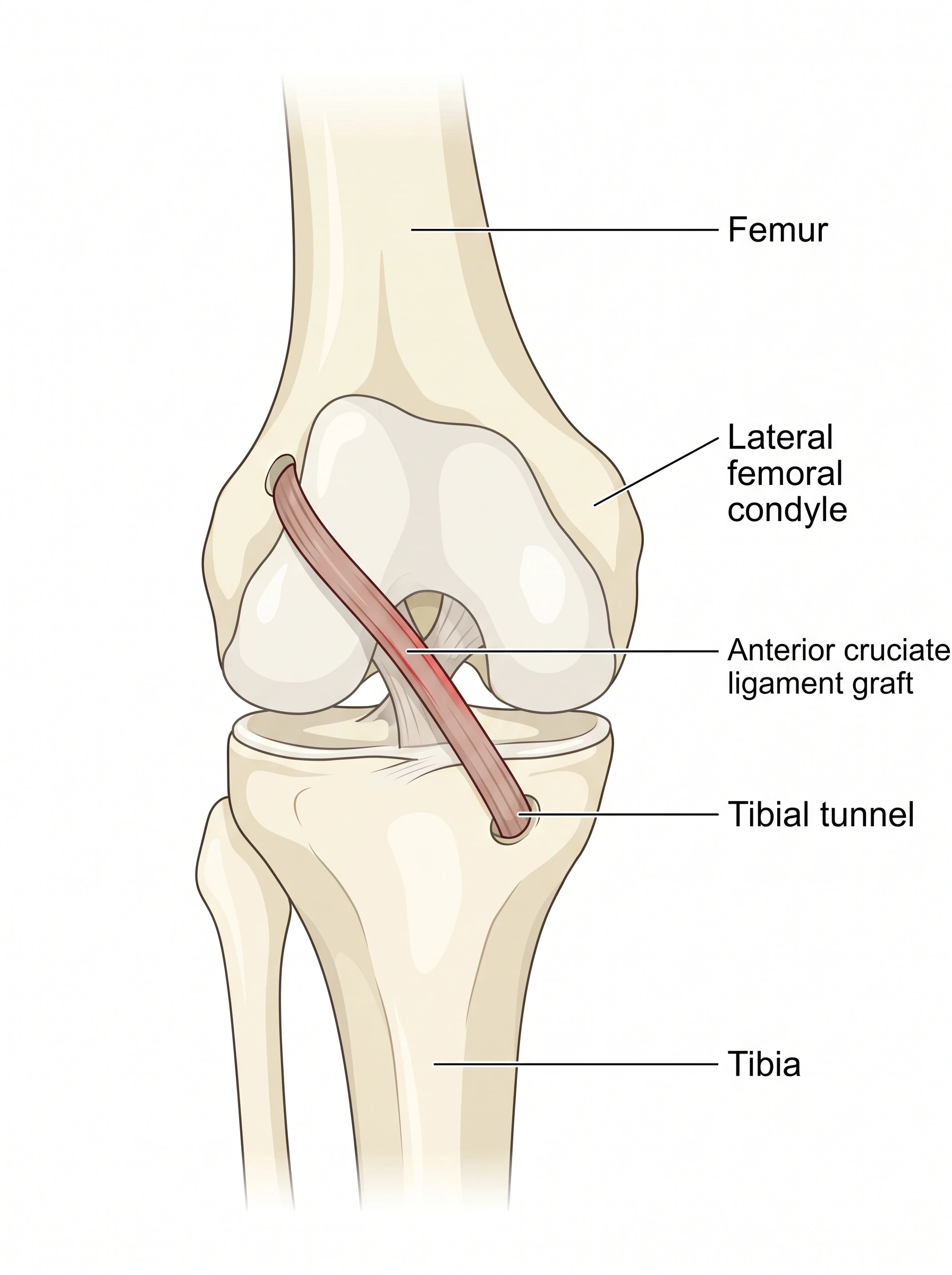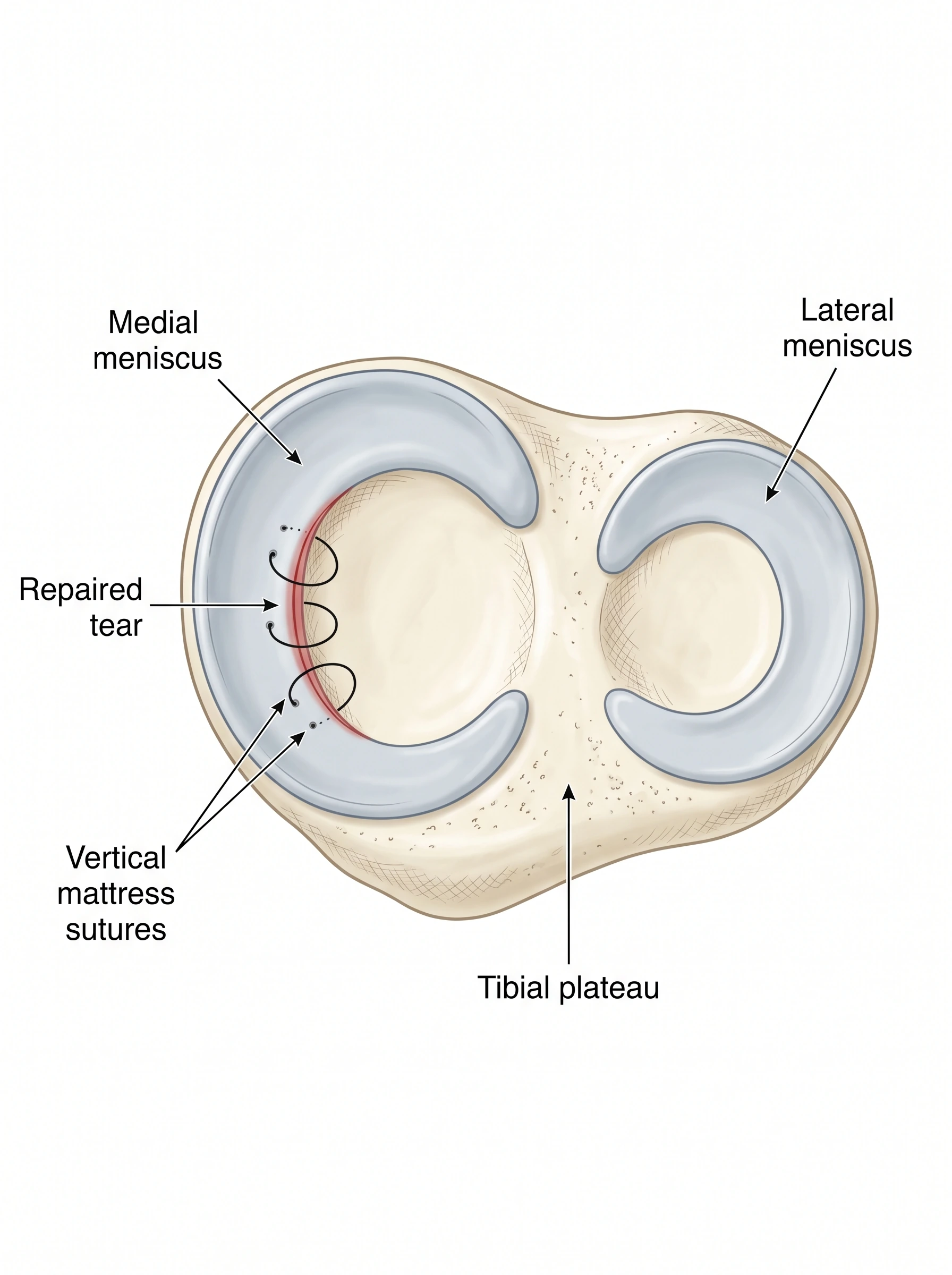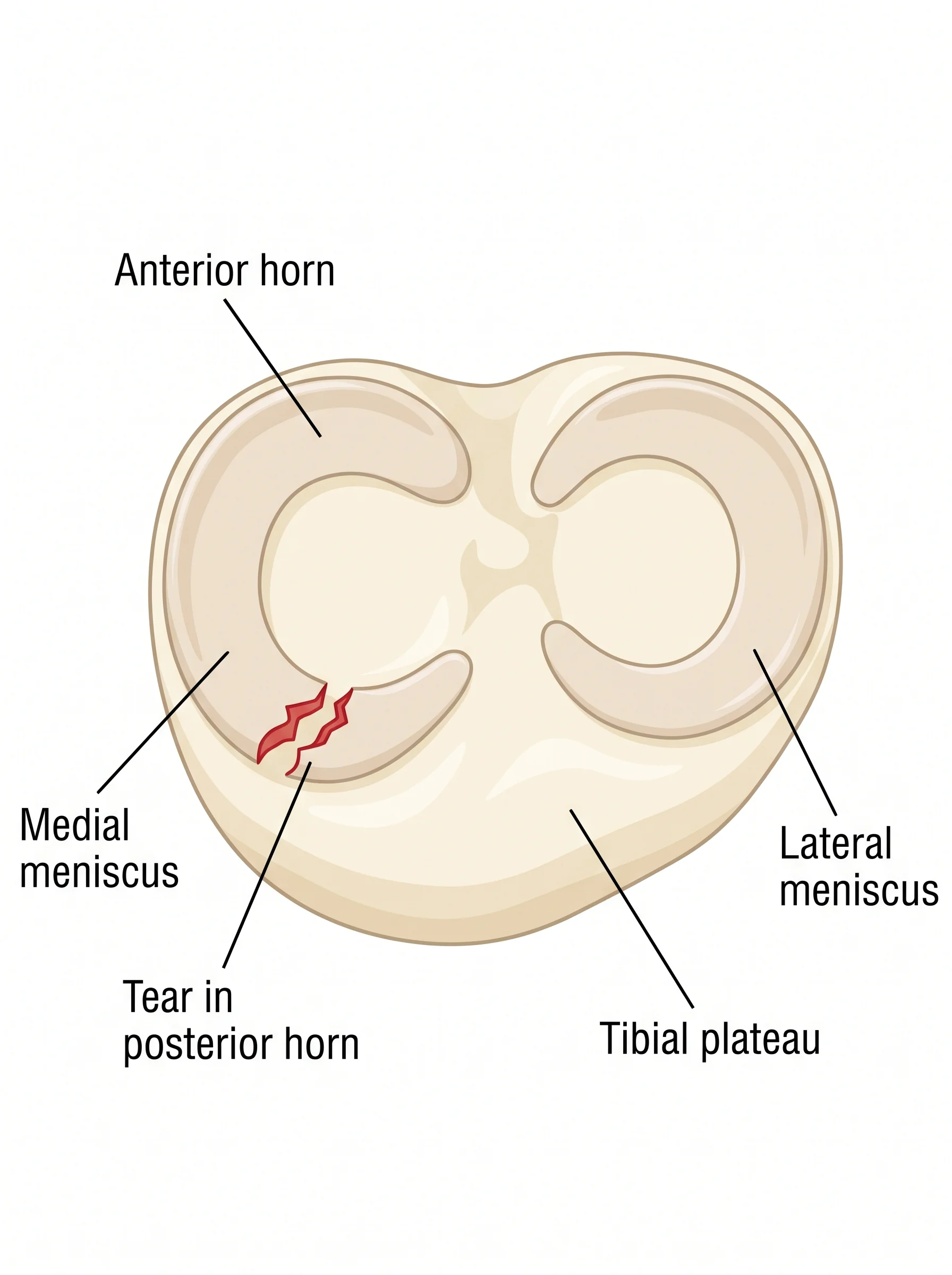
A meniscus tear is damage to one of the knee's C-shaped cushions that absorb shock and steady the joint. It often causes pain, swelling, and catching. Many tears settle with rest and guided exercise. When surgery is needed, repairing or trimming the tissue is chosen to fit the tear and the person.
Ryan Simovitch diagnoses and treats meniscus tear in West Palm Beach, from the first visit through recovery.
What is Meniscus Tear?
The meniscus is a pair of C-shaped pads of tough, rubbery cartilage inside each knee.
There are two in every knee, one on the inner side and one on the outer side. They sit between the thigh bone and the shin bone and act like shock absorbers and stabilizers, spreading load across the joint and helping it move smoothly. A meniscus tear is a crack or split in one of these pads.
Tears happen in two broad ways. A sudden, or traumatic, tear often comes from twisting the knee while the foot is planted, common in sports and quick pivots. A gradual, or degenerative, tear develops as the tissue becomes more brittle with age, so it can split with an ordinary movement such as rising from a squat. Degenerative tears often occur alongside early osteoarthritis, the slow thinning of joint cartilage.
Where a tear sits matters, because the meniscus has an uneven blood supply. The outer edge has better blood flow, which supports healing, while the inner portion has little blood supply and heals poorly on its own. This difference helps explain why some tears can be repaired and others are better managed differently.
Not every tear needs surgery, and not every tear seen on a scan is the source of pain. Many people have meniscus changes on an MRI without symptoms, especially as they get older. For that reason, the specialist reads the images alongside your story and exam rather than treating the picture by itself.
This deep guide pairs with the shorter meniscus tear service page at the office of Ryan Simovitch. Start there for a quick overview, then use this page for the fuller picture.
What are the symptoms of Meniscus Tear, and when should you see a specialist?
In plain terms, a meniscus tear often feels like the following.
- Pain along the inner or outer joint line, the seam where the thigh and shin bones meet. - Swelling that builds over a day or two after the injury or flare. - A catching, clicking, or locking feeling, as if something is getting in the way. - The knee not fully straightening or bending, or feeling stuck. - A sense that the knee might give way, especially when twisting or on stairs. - Pain with squatting, kneeling, or pivoting.
With a sudden tear, some people feel a pop at the moment of injury, followed by gradual swelling. With a degenerative tear, symptoms may creep in without a clear starting point.
It is reasonable to see a specialist when:
- The knee locks, catches, or will not fully straighten. - Swelling keeps coming back or does not settle over a couple of weeks. - Pain limits walking, work, sleep, or the activities you care about. - The knee feels unstable or gives way. - Symptoms are not improving after two to three weeks of rest and gentle care.
Seek care promptly if the knee is truly locked and stuck, if you cannot bear weight, or if there is a large, rapid swelling after an injury, since these may need earlier evaluation.
How is Meniscus Tear diagnosed, and what does the visit involve?
Diagnosing a meniscus tear combines your history, a hands-on exam, and imaging when needed.
Your visit typically includes:
- A history. How the injury happened or how symptoms began, what movements bring on pain, and whether the knee catches, locks, or swells. - A physical exam. The specialist checks how far the knee moves, presses along the joint line to find tenderness, and performs gentle maneuvers that rotate and bend the knee to reproduce the catching. These tests give strong clues about a tear. - X-rays. These do not show the meniscus, which is soft tissue, but they reveal the bones and joint space and help check for osteoarthritis or other causes of pain. - MRI. This scan uses a magnet to show soft tissues in detail, including the meniscus. It can confirm a tear and show its size, pattern, and location, which guides treatment.
Because meniscus changes are common on MRI even in knees that feel fine, the specialist weighs the scan against your symptoms and exam. A tear that matches your pain and mechanical symptoms, such as locking, is treated differently from an incidental finding. The visit is about connecting the picture to your experience so the plan makes sense for you.
What is the natural course, and what is the procedure sequence?
How a meniscus tear behaves depends on its type and location.
For many degenerative tears, the natural course is gradual improvement. Symptoms that flare with a movement often settle over weeks as swelling comes down and the surrounding muscles regain strength. The tear itself may not "heal" in the sense of knitting together, but it can become quiet and stop causing trouble.
Sudden tears in the well-supplied outer edge sometimes heal, particularly in younger people, especially when protected and rehabilitated. Tears in the poorly supplied inner portion rarely heal on their own, though they may still become manageable without surgery.
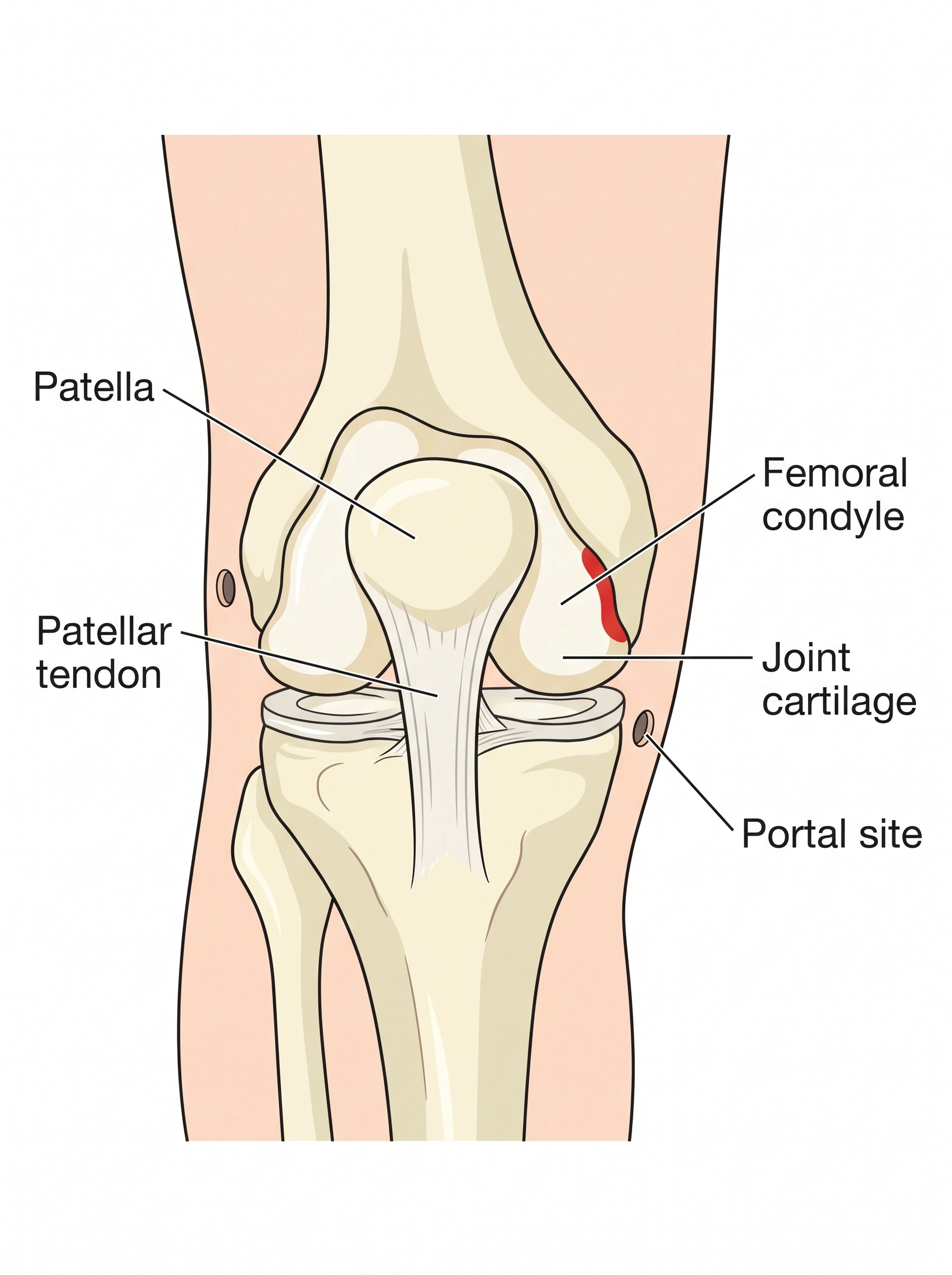
If surgery is chosen, it is usually done with arthroscopy, a technique that uses a small camera and thin instruments through tiny incisions. In sequence, a typical procedure involves:
- Anesthesia, given so you feel no pain during surgery. The type is discussed with the anesthesia team beforehand. - Small incisions around the front of the knee, through which the camera and instruments pass. - Inspection of the joint on a screen, letting the surgeon see the tear directly and confirm the plan. - Repair or trimming. For a repairable tear, small stitches hold the edges together to heal. For a non-repairable tear, the torn, unstable portion is carefully trimmed, saving as much healthy meniscus as possible. - Closure of the small incisions, usually with stitches or adhesive strips.
Most people go home the same day. Whether the meniscus was repaired or trimmed strongly shapes the recovery that follows, because a repair needs time to heal before full loading.
What is the recovery timeline for Meniscus Tear?
Recovery differs a great deal depending on whether a tear is managed without surgery, trimmed, or repaired.
The milestones below are based on what you can do, alongside typical ranges from general guidance from the American Academy of Orthopaedic Surgeons. These are ranges, not promises.
Non-surgical recovery. The goal is to walk comfortably, regain full motion, and return to activity. With guided exercise, many people improve meaningfully over about four to eight weeks. The milestone is walking and using stairs without catching or significant pain.
After trimming (partial meniscectomy). The goal is early return of motion and strength. Because no tissue needs to heal together, weight bearing usually progresses quickly. Many people walk comfortably within a couple of weeks and return to fuller activity over about four to six weeks. The milestone is full motion and a steady, pain-controlled gait, followed by return to low-impact exercise.
After repair. The goal is to protect the stitched tissue while it heals, which takes longer. A brace and limits on deep bending and weight bearing are common in the early weeks. Return to fuller activity and sport is often staged over several months. The milestone is healing confirmed by your surgeon, full motion, and thigh strength close to the other leg before higher-impact activity.
Across all paths, progress is judged by function, not the calendar alone. Rushing a repair, in particular, can risk the healing tissue, so following the staged plan matters.
How should you prepare for Meniscus Tear?
If you and your surgeon choose surgery, a little planning makes the first days smoother.
This is same-day surgery for most people, so preparation focuses on a safe return home.
Home setup. Clear walkways, secure loose rugs, and set up a comfortable spot to rest with room to elevate the leg. Keep everyday items within easy reach so you are not stretching or twisting.
Transportation. Arrange for someone to drive you home, since you cannot drive after anesthesia. Plan for a ride to and from any early follow-up visits as well.
Time off. Talk with your surgeon about how much time to take from work based on your job and whether the meniscus is repaired or trimmed. Desk work usually allows an earlier return than physical work.
Support at hand. Have someone available for the first day or two to help with meals and getting around, especially if you will use crutches or a brace.
Equipment. Your team may recommend crutches, a brace, or ice therapy. Have these ready before surgery so nothing is missing on day one.
Health preparation. Follow the instructions on eating, drinking, and medications before surgery, and tell the team about all medicines and supplements you take. If insurance coverage is a concern, the office can answer those questions directly.
Which warning signs should you call about?
Whether you are recovering with or without surgery, call the office if you notice the following.
- Increasing redness, warmth, or drainage from an incision, or a fever. These can signal infection. - Pain or swelling that is getting worse rather than better. - The knee locking and staying stuck, unable to straighten. - Calf pain, swelling, warmth, or tenderness, which should be checked promptly. - Numbness, tingling, or a cold, pale foot. - Pain not controlled by the plan you were given.
For severe symptoms such as sudden chest pain, trouble breathing, or a large, hot, swollen leg, seek emergency care right away. For other concerns, call the office of Ryan Simovitch at ; the team would rather answer a question early than have you wait and worry.
What results can you expect from Meniscus Tear?
People understandably want to know how meniscus treatment turns out.
Results vary, and the figures below are ranges, not promises.
According to general guidance from the American Academy of Orthopaedic Surgeons, many degenerative meniscus tears improve with non-surgical care, and structured physical therapy can provide symptom relief comparable to surgery for a large share of these tears.
For arthroscopic surgery, general guidance from the American Academy of Orthopaedic Surgeons notes that most people who have a torn portion trimmed experience good relief of mechanical symptoms such as catching and locking, with recovery measured in weeks for many.
For meniscus repair, general guidance from the American Academy of Orthopaedic Surgeons notes that repair aims to preserve the cushion and protect the joint over the long term, that healing takes longer than after trimming, and that the majority of repairs heal successfully, though some do not and may need further treatment.
The shared message is that most people, with or without surgery, return to comfortable activity, and that the best choice depends on the tear and the person. The specialist will place these general figures in the context of your knee.
What do patients ask most?
Do all meniscus tears need surgery?+
What is the difference between repairing and trimming the meniscus?+
Will a torn meniscus lead to arthritis?+
How soon can I walk after arthroscopic surgery?+
Can an MRI showing a tear be ignored?+
What are the treatment options?
- 01Early reliefIn the first days, relative rest, ice, and elevating the leg reduce swelling and pain. Anti-inflammatory medicine, which lowers inflammation and eases discomfort, can help; review regular use with your clinician.
- 02Guided exerciseA physical therapy program, led by a clinician who teaches targeted movements, restores motion and strengthens the muscles around the knee, especially the thigh and hip. Strong, balanced muscles take load off the meniscus and often reduce symptoms substantially. For degenerative tears, general guidance from the American Academy of Orthopaedic Surgeons notes that structured exercise can relieve symptoms comparably to surgery for many people.
- 03Activity adjustmentsTemporarily easing off deep squats, twisting, and high-impact activity gives the knee a chance to calm down while you build strength.
- 04InjectionsFor a painful, swollen knee, a corticosteroid injection can reduce inflammation for a stretch of time, which can support a return to exercise.
Fellowship trained at Massachusetts General Hospital (Harvard Shoulder Service); Uniklinik Balgrist, Zurich, Switzerland (The Harvard Intercontinental Shoulder Fellowship). Sees patients in West Palm Beach.
About Dr. Simovitch →