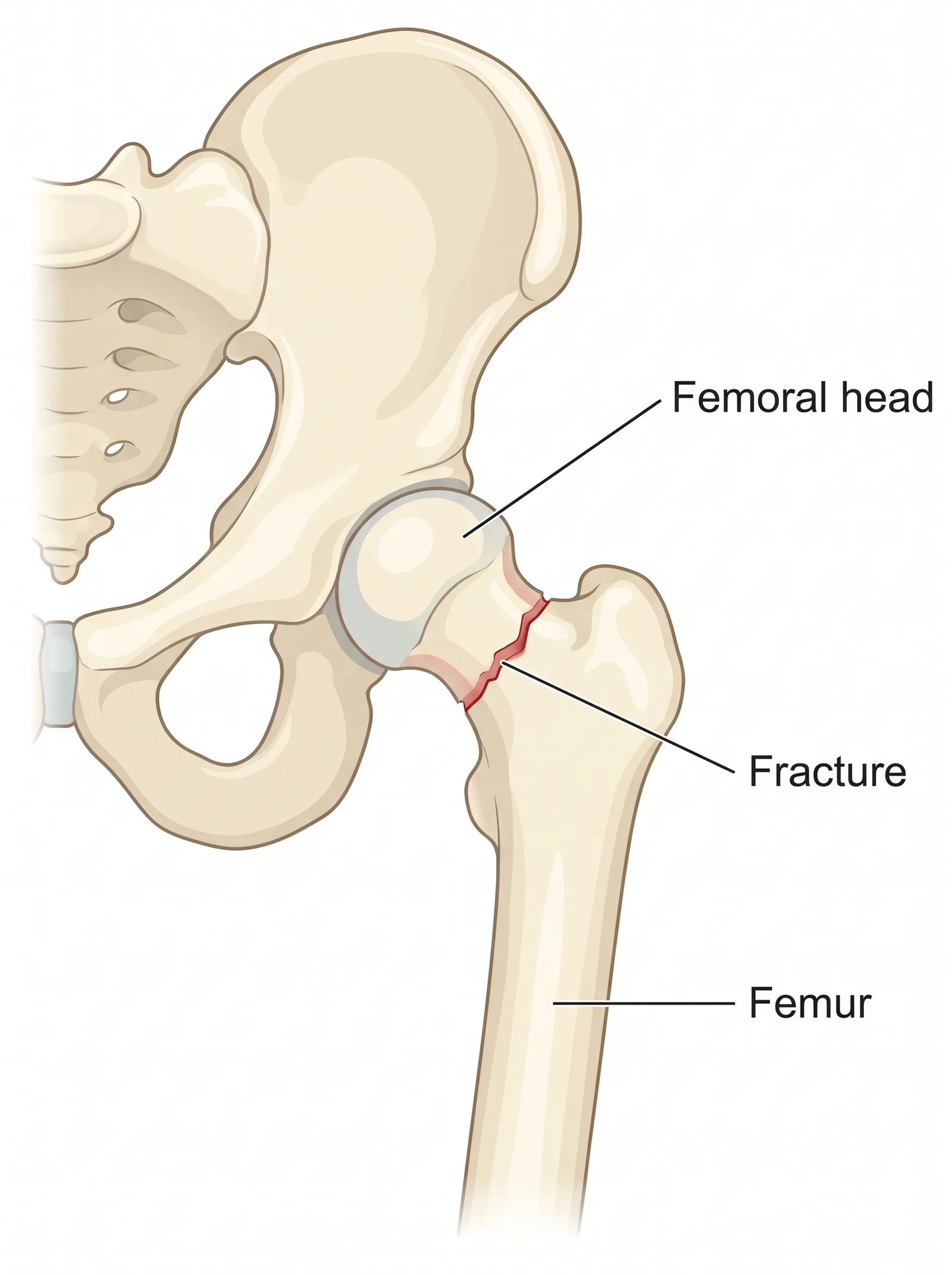
A fracture is a break in a bone. It can be a thin crack or a full break into two or more pieces. Most fractures heal well with the right care. Treatment depends on which bone broke, how badly, and your health. Early, steady care supports healing.
Ryan Simovitch diagnoses and treats fractures (broken bones) in West Palm Beach, from the first visit through recovery.
What is Fractures (Broken Bones)?
A fracture is a break in a bone.
The word "fracture" and the phrase "broken bone" mean the same thing. There is no such thing as a fracture that is somehow less serious than a break. They are one and the same.
Bones are living tissue. They have a blood supply, they can feel pain, and they can repair themselves over time. When a bone breaks, your body starts a healing process within hours. The job of treatment is to give the bone the best possible conditions to heal in the right position.
Fractures come in different patterns, and the pattern matters for care:
- A stable fracture means the broken ends line up and have barely moved. These often heal with a cast or brace. - A displaced fracture means the broken ends have shifted out of line. These sometimes need to be moved back into place. - A comminuted fracture (say: kom-ih-NYOO-ted) means the bone broke into three or more pieces. - An open fracture, also called a compound fracture, means the broken bone has pierced the skin or a wound reaches down to the bone. This raises the risk of infection and needs prompt care. - A stress fracture is a small crack caused by repeated force over time, common in the foot and shin, often from a sharp jump in activity.
The bone that breaks also shapes the plan. A broken wrist, a broken hip, a broken ankle, and a broken collarbone each heal at their own pace and carry their own concerns. A specialist looks at the whole picture: the bone, the pattern, the soft tissue around it, and you as a person.
An orthopedic surgeon (a doctor who treats bones, joints, and the soft tissues that connect them) is trained to manage the full range of fractures, from the simple to the complex. Many fractures never need surgery. The goal is always the same: a bone that heals in good alignment so the limb works well and feels comfortable.
What are the symptoms of Fractures (Broken Bones), and when should you see a specialist?
Most people know something is wrong the moment a bone breaks.
Common signs include the following.
- Sharp pain that gets worse when you move or press on the area. - Swelling and, over the next day or two, bruising. - A part of the body that looks bent, crooked, or out of shape. - Trouble putting weight on a leg, or trouble using an arm or hand. - A grinding or snapping feeling at the time of injury.
Some fractures are quieter. A stress fracture may cause an ache that comes on during activity and eases with rest, then slowly gets worse over weeks. A small crack in a bone can feel like a bad sprain. This is one reason it helps to be checked rather than to guess.
Go to an emergency room right away if you have any of these:
- Bone poking through the skin, or a deep wound over a suspected break. - A limb that looks badly bent or is cold, pale, or numb. - Heavy bleeding you cannot stop. - A suspected break in the neck, back, hip, or pelvis, or a fracture after a major fall or crash. - Severe pain you cannot manage.
See a specialist within a few days for pain, swelling, or trouble using a limb that does not settle after a minor injury, even if you can still move it. It is common to walk on a broken foot or use a broken wrist for a day or two before getting it checked. Getting the right diagnosis early helps the bone heal in the right position.
If you are not sure how serious an injury is, the office can help you decide where to be seen. When in doubt, get it looked at.
How is Fractures (Broken Bones) diagnosed, and what does the visit involve?
The visit starts with your story.
The specialist asks how the injury happened, where it hurts, and how the pain behaves. How a bone breaks tells a lot about the fracture. A twist, a fall onto an outstretched hand, and a direct blow each produce different patterns.
Next comes a careful exam. The specialist looks at the shape of the limb, checks for swelling and tenderness, and gently tests movement. Just as important, they check the nerves and blood flow beyond the injury, making sure the fingers or toes are warm, have feeling, and have a good pulse. This protects the soft tissue while the bone is treated.
Imaging confirms the diagnosis:
- X-rays are the first and most common test. They show most fractures and reveal the pattern and position of the break. - A CT scan (a detailed set of X-ray images that build a cross-section view) may be used for complex breaks, such as those that reach into a joint, so the surgeon can plan carefully. - An MRI (a scan that uses magnets to show soft tissue and bone in fine detail) can find stress fractures and small breaks that X-rays miss, and it shows nearby ligaments and tendons.
Sometimes a hairline crack does not show on the first X-ray. If the exam strongly suggests a fracture, the specialist may treat it as a break and repeat the X-ray in one to two weeks, when early healing can make the line easier to see.
By the end of the visit you should understand which bone broke, the pattern of the break, whether it is stable or displaced, and the plan. Ask questions. A clear picture of your own injury helps you take part in the decisions ahead.
What is the natural course of Fractures (Broken Bones)?
Understanding how bone heals helps the recovery timeline make sense.
Healing moves through overlapping stages.
In the first days, the body forms a blood clot around the break and sends in cells that clean up damaged tissue. This is why the area swells and feels warm. Rest and support during this stage protect the fragile early repair.
Over the following weeks, the body builds a soft bridge of tissue between the broken ends, called a soft callus (a soft, early repair tissue). You cannot see it, but it begins to hold the pieces together. This stage is why steady immobilization matters. Too much movement can break the young bridge and slow healing.
Next, the body turns that soft bridge into a hard callus made of new bone. On an X-ray, the fracture line starts to blur as bone crosses the gap. This is the point at which many people can begin to bear more weight or use the limb more, always guided by the specialist.
Finally, over months, the body remodels the new bone. It reshapes and strengthens it along the lines of everyday stress, so the bone can carry normal loads again. This last stage is slow and quiet and continues long after you feel fully recovered.
Several things influence how smoothly this process goes. Good blood supply, steady position, and healthy tissue help. Smoking, poorly controlled diabetes, certain medicines, and poor nutrition can slow healing. Your specialist may talk with you about these, because small changes can support the bone's work.
What is the recovery timeline for Fractures (Broken Bones)?
Bones heal on their own schedule, so the best way to track progress is by what you can do, not only by the date.
The ranges below come from general guidance from the American Academy of Orthopaedic Surgeons (AAOS). These are ranges, not promises. Your bone, your break, and your health shape your path.
Early stage, roughly the first two to four weeks. The goal is to protect the fracture and control swelling and pain. You are healing well when swelling starts to go down, pain eases day by day, and you can keep the limb supported and elevated as advised. Fingers or toes beyond the injury should stay warm and have feeling.
Middle stage, roughly weeks four to eight for many fractures. The goal is early healing and gentle motion. You are progressing when X-rays show bone forming across the break, when pain with careful movement is mild, and when your specialist clears you to move nearby joints or bear light weight. This is often when a cast comes off and a removable brace goes on.
Later stage, roughly two to four months for many fractures. The goal is solid healing and return to activity. You are ready to advance when the fracture is firm on exam and X-ray, when you can bear weight or use the limb without sharp pain, and when strength and motion are coming back. Physical therapy (guided exercises to rebuild motion and strength) often plays a large part here.
Full recovery. Many people feel close to normal within a few months, according to general AAOS guidance, but bone continues to strengthen and remodel for up to a year or more. These are ranges, not promises. Larger bones, breaks into joints, and open fractures usually take longer than simple breaks in small bones.
Milestones that show real progress include walking without a limp for leg fractures, gripping and lifting for arm fractures, sleeping through the night without pain medicine, and returning to work or sport as cleared. Reaching each one on your own timeline is the goal, not matching a fixed calendar.
How should you prepare for your visit and recovery?
A little preparation makes your care smoother.
Before your visit, bring the details. Note how and when the injury happened, where it hurts, and what makes it better or worse. Bring a list of your medicines and allergies, and any past injuries to the same area. If you have had X-rays elsewhere, bring them or the disc.
Support the limb on the way in. Keep it still and raised when you can, and use ice wrapped in a cloth for short periods to ease swelling. Do not eat or drink much before the visit if a reset or procedure might be needed, and call ahead to ask if you are unsure.
If you will be in a cast or brace, plan a little. Loose clothing that fits over the cast helps. For a leg injury, set up a spot where you can sit with the leg raised. Think about how you will get around: crutches, a walker, or a knee scooter may be advised, and it helps to clear rugs and clutter that could trip you.
Arrange a ride if you might receive medicine for a reset, since you should not drive afterward. Ask a family member or friend to be available for the first day or two, especially for a leg or hip injury.
Write down your questions. Good ones include: Which bone broke, and how badly? Will this need surgery? How long will I be in a cast or brace? When can I bear weight or use the limb? What warning signs should I watch for? Bringing your questions written down means you leave with real answers.
If you have questions about coverage or costs, the office staff can walk you through what your insurance covers. Ask them directly; they are glad to help.
Which warning signs should you call about?
Most fractures heal without trouble, but a few problems need prompt attention.
Learn these signs so you know when to act.
Call the office right away, or seek urgent care, if you notice:
- Pain that keeps getting worse instead of better, or pain not helped by your prescribed medicine. - Numbness, tingling, or a cold, pale, or bluish look in the fingers or toes beyond the injury. - Swelling that keeps growing, or a cast that feels far too tight. - A cast that becomes wet, soft, cracked, or has a bad smell. - Fever, chills, or redness, warmth, and drainage around a wound. These can signal infection.
Seek emergency care at once for severe, unrelenting pain in a muscle that feels tight and hard, especially with numbness. In rare cases, pressure builds inside a limb after injury, a condition called compartment syndrome, and it needs urgent treatment.
One rule is worth memorizing. Tightness, numbness, and rising pain under a cast are not something to wait out. It is always right to call. Keep your care team's phone number where you can find it, and know where the nearest emergency room is.
For questions that are not urgent, such as how to shower with a cast or when your next X-ray is, the office can help during regular hours. Never feel that a question is too small. Asking early prevents bigger problems.
What results can you expect from Fractures (Broken Bones)?
Most fractures heal well.
According to general guidance from the American Academy of Orthopaedic Surgeons (AAOS), the large majority of broken bones heal fully when they are treated in good alignment and given time. These are ranges and general findings, not promises about any one person.
A few points help set fair expectations:
- Simple fractures in otherwise healthy people usually heal within several weeks to a few months, per general AAOS guidance. Larger bones and breaks into joints take longer. - A small share of fractures heal slowly (called delayed union) or fail to heal (called nonunion), according to general AAOS guidance. Smoking, poor blood supply, infection, and certain health conditions raise this risk. Many of these can still be treated. - Fractures that reach into a joint surface carry some added risk of joint stiffness or, over the long term, arthritis (wear of the joint surface), per general AAOS guidance. Careful alignment and therapy lower that risk.
Your own outcome depends on the bone, the break, your health, and how the two of us work together through healing. Following the plan for immobilization, weight-bearing, and therapy has a real effect. So do steady habits like good nutrition and, if it applies to you, not smoking during healing.
We will track your progress with exams and X-rays and adjust the plan as your bone tells us how it is doing. The aim is a bone that heals soundly and a limb that works and feels the way you need it to.
What do patients ask most?
What do patients ask about Fractures (Broken Bones)?+
What are the treatment options?
- 01ImmobilizationA cast, splint, or brace holds the bone still so it can knit. Holding the pieces steady is the heart of fracture care.
- 02Closed reductionIf the ends have shifted, the specialist can often guide them back into line without surgery, using steady pressure. You are given medicine to stay comfortable during this. A cast or splint then holds the position.
- 03Activity changes and supportFor some stress fractures, rest from the activity that caused it, along with a supportive boot or brace, is enough.
- 04Functional bracingA brace that allows controlled, limited movement can help certain fractures heal while keeping nearby joints from getting stiff.
Fellowship trained at Massachusetts General Hospital (Harvard Shoulder Service); Uniklinik Balgrist, Zurich, Switzerland (The Harvard Intercontinental Shoulder Fellowship). Sees patients in West Palm Beach.
About Dr. Simovitch →